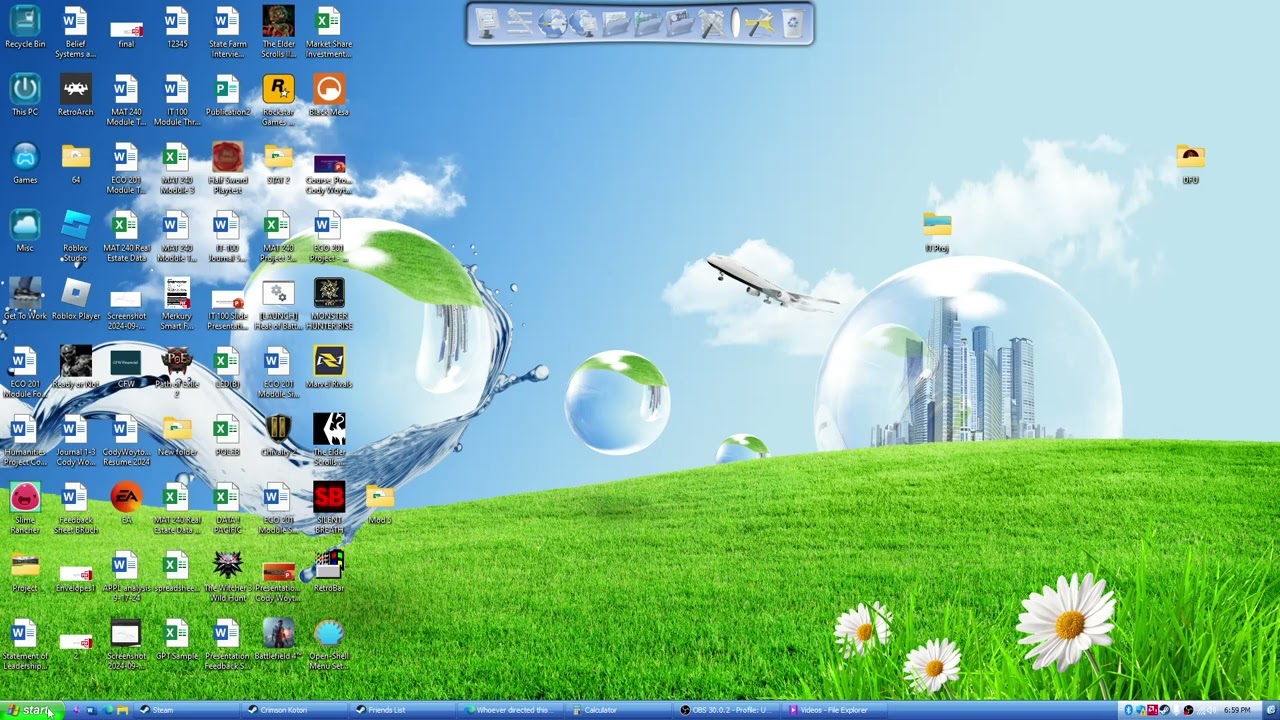
Web 1.0 refers to how the digital landscape appeared in the 90s-2000s. It was characterized by a lack of coprate presence on the internet. Many of these sites were designed like this one, created by amatuer coders in html, and then released onto the World Wide.

X
X
X
X
X
The digital landscape allowed for new forms of creativity in multiple ways. Early on, simple word processing helped writing to become more accessible. Coding also became more common, as the inhabitants of the World Wide Web were able to experiment with making videogames, websites and programs. As technology progressed, the internet became the primary tool for creating, consuming and sharing creative material like music, art and film.
The advent of the internet radically changed existing communities, while also creating new ones. Before the internet, your community was almost exclusively the people who lived with and near you. The World Wide Web, however, allowed for complete strangers to communicate instantly. This caused new communities to arise, often based on a shared love of digital spaces. Coders, gamers, and tech-savvy artists all were able to make connections that would have been impossible face-to-face. In addition, the Internet allowed for marginalized individuals to come together. Queer communities were specifically impacted, as many LGBTQ+ individuals lacked a robust community in their hometowns, which digital spaces made up for. Soon, the internet became a vital space for Queer art and community.

While the digital age revolutionized social and artistic experiences, it also revolutionized business. For the first time, businesses were able to exist on a large scale without any form of store or catalogue. Instead, a website was all that was necessary to strike in rich in the digital age. This resulted in a rush of entrepreneurs trying to start a website, which was followed by eager shareholders. This phenomenon was known as the Dot-com bubble. Eventually, the bubble would burst, around mid 2000. This would leave most of the market in the hands of a few huge corporations, such as Amazon. Ultimately, corporations like these would come to control most of the internet, destroying Web 1.0 and replacing it with the sleeker, more corporate, Web 2.0.
.png)
The internet also provided a unique opportunity for artists. Filmmakers, musicians, writers and visual artists were all able to independently distribute their work across the entire digital world, at their own leisure. In addition, the internet gave them many new tools. Artists were able to create at-home editing and recording studios housed in their PCs. PCs could support much more advanced synthesizers at much lower costs, which led to a flowering of electronic music. Visual artists gained access to tools such as photoshop and various digital illustration apps, which allowed them to experiment with new textures and techniques. It wasn't just the medium that the Internet changed, however. Via mass communication, artists were able to use the internet to promote, share ideas, and build communities. Films such as The Blair Witch Project used the internet to market their works through websites and blog posts. This would in itself become an art form, in the form of ARGs, or Alternate Reality Games. Entire musical scenes would spring up digitally, with young artists finding worldwide acclaim. For example, the Swedish Cloud Rap collective Drain Gang was able to find a global audience of dedicated "Drainers" despite their unconventional musical approach. Literature would become more available to newcomers, as young writers used platforms such as Creepypasta to share short horror stories. Overall, the internet would change the artistic landscape forever.